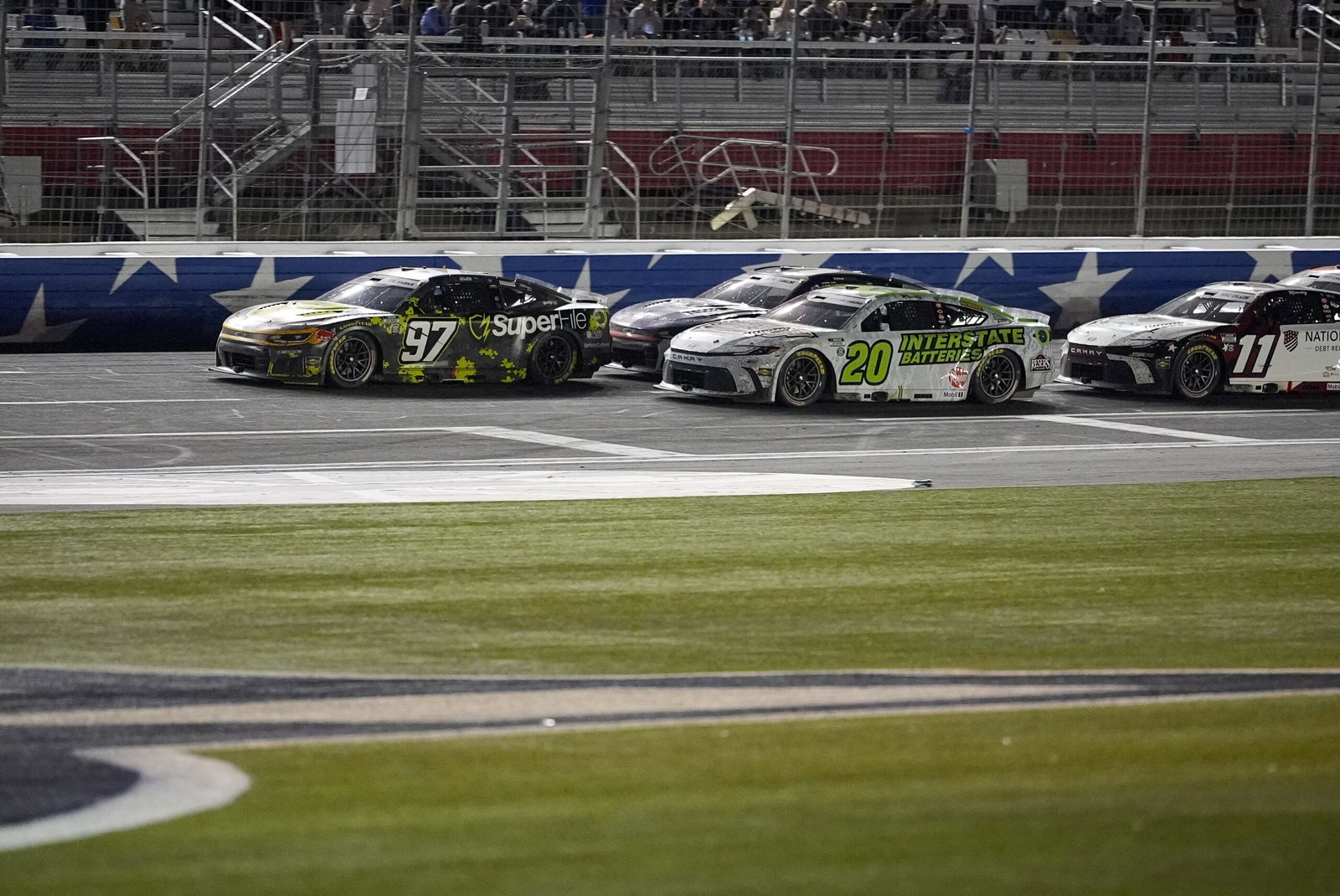
May 24, 2026; Concord, North Carolina, USA; Trackhouse Racing driver Shane Van Gisbergen and Joe Gibbs Racing driver Christopher Bell (20) lead Spire Motorsports driver Daniel Suarez (7) and Joe Gibbs Racing driver Denny Hamlin (11) at the restart during the Coca-Cola 600 at Charlotte Motor Speedway. Mandatory Credit: Jim Dedmon-Imagn Images
May 24, 2026; Concord, North Carolina, USA; Trackhouse Racing driver Shane Van Gisbergen and Joe Gibbs Racing driver Christopher Bell (20) lead Spire Motorsports driver Daniel Suarez (7) and Joe Gibbs Racing driver Denny Hamlin (11) at the restart during the Coca-Cola 600 at Charlotte Motor Speedway. Mandatory Credit: Jim Dedmon-Imagn Images
NASCAR is now facing calls from within the community to limit second Cup Series appearances for several historic tracks around the nation in the same season. This comes against the backdrop of several tracks that host only one race a season selling out this year, including those in Michigan, Nashville, and Pocono.
All three tracks get just one race a year. In fact, Pocono recorded its fourth consecutive Cup Series sellout in 2026.
On Dirty Mo Media, NASCAR reporter Jeff Gluck seemed to question exactly that, asking whether such trends extend beyond market strength.
"Is this a coincidence that these tracks are thriving with one race?" Gluck began. "Is it just, it’s just, well, it’s Nashville, great market. Well, it’s Michigan, great market. Well, it’s Pocono... or is it a sign that everyone needs to go to one race? Bristol needs to go to one race, and Kansas needs to go to one race."
This argument was further built upon by reporter Jordan Bianchi, who argued that scarcity pushes demand.
"A lot of these tracks are struggling to draw," said Bianchi. "But when you consolidate, and you say, 'This is your one time a year to go', the excuse of 'Well, we'll just go later this year when they come back, you eliminate that. And then it makes it an event. It feels special. There is uniqueness."
Gluck seemed to bring in an excellent example to support his claim. He highlighted how when Fontana's hosting rights were reduced to one, the attendance increased and revitalized interest.
The concluding statement by Gluck should set the path forward for NASCAR strategists, as he added:
“It's evolved from the early 2000s, where the only way you can even have a track be viable is if you have two races at this place.”
This assertion isn't rooted in conjecture alone but is also visible in the attendance figures.
One Race vs Two Races: The Attendance Evidence
Let's first take the example of Pocono. It held two races annually from 1982 to 2021. But when it switched to a single race in 2022, it recorded an attendance of around 100,000 people, the largest since 2010. Pocono then followed that with consecutive sellouts for four years between 2023 and 2026.
Or take the example of Michigan International Speedway. After losing its second date following the 2020 season, Michigan reported five consecutive sold-out campgrounds and achieved its first grandstand sellout in more than a decade for the 2026 FireKeepers Casino 400.
For a track that had to reduce its seating capacity from roughly 137,000 to 56,000 by tearing down Grandstands in Turns 1,3, and 4 due to low attendance, this sellout obviously meant a lot.
If anything, Bianchi's and Gluck's argument is supported directly by the evidence. Rather than splitting the experience across two weekends, it appears easier to consolidate demand, reduce costs, and lead to sellouts.
Follow the Daytona Racing Digest for more NASCAR updates!
Written by

Uday Jakhar
Edited by

Yash Kotak