Credits: Imago
Credits: Imago
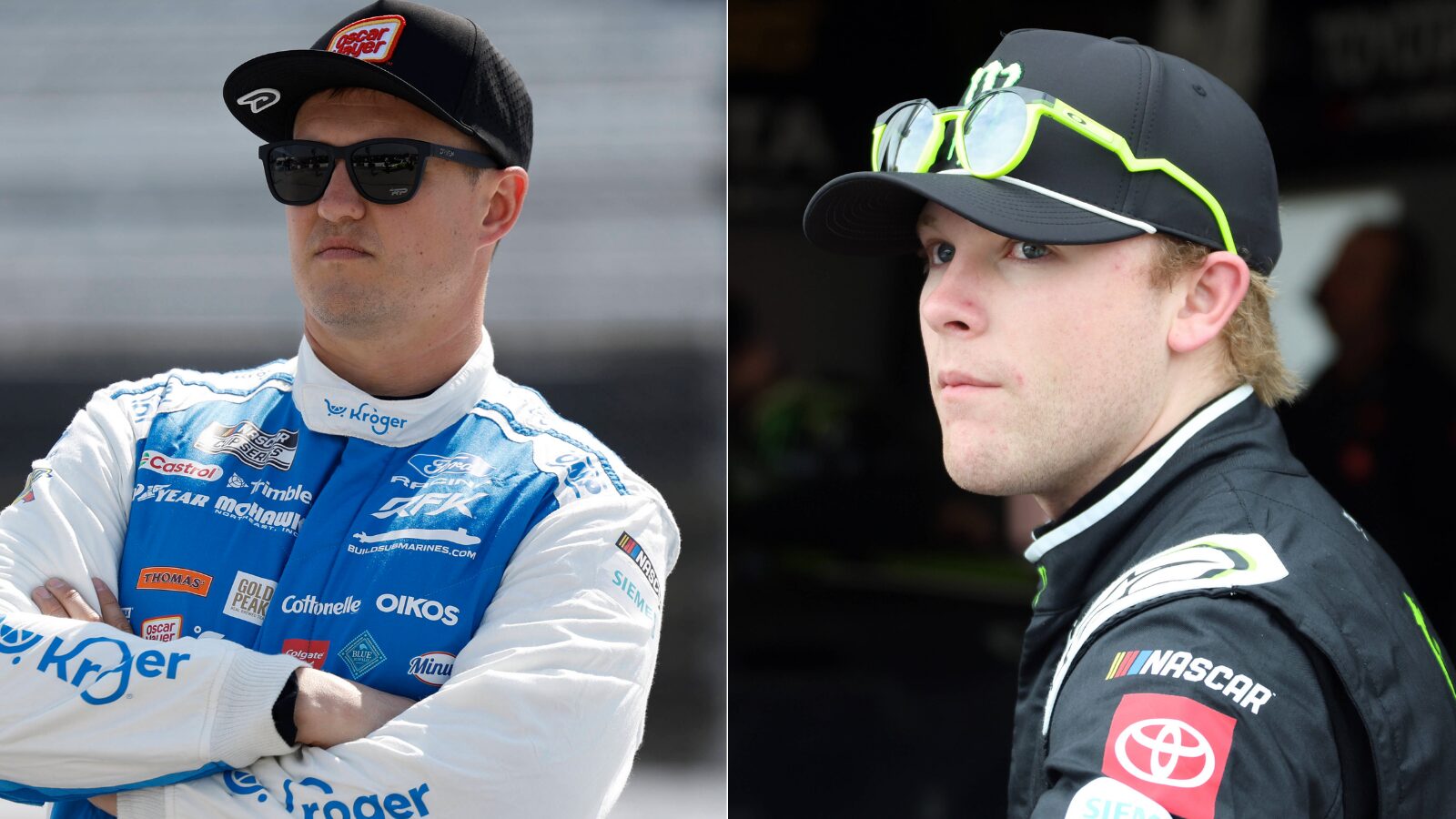
Ty Gibbs is now reflecting on the Texas incident that left his car destroyed and the racing world debating how officials define track intent.
The entire controversy started at the NASCAR Cup Series race in Texas after Ryan Preece slammed into Ty Gibbs, sending the latter spinning into the outside wall. But this wasn’t the most important part of the racing incident.
This debacle became even more controversial when NASCAR later reviewed the radio communication, SMT data, as well as camera angles before issuing a massive 25-point penalty and $50,000 fine for Preece.
Post-race, an interview by Gibbs highlighted how the radio communication had made everything worse. “Obviously, that didn’t help the situation. Me saying all that stuff,” Gibbs admitted, before adding, “If you say you’re gonna wreck somebody and you do it, that’s obviously an issue.”
Gibbs, however, remained quite calm in temperament, repeatedly emphasizing, “We’ll let NASCAR figure that out,” while also admitting, “we got our race car tore up, lost a lot of points for, you know, for going through that bottom and not making any contact.”
When asked again about the controversy, Gibbs stressed the week ahead, “I’m just worried about going racing this weekend and trying to get our points back that we lost.”
He tried to stay comical even on the broader issues of the race weekend as he concluded with, “The fans probably hope the weather holds out so they can sit in the rain.”
But why was NASCAR so strict about a simple racing incident? Well, the key moment was after aggressive racing between both the drivers, Preece was heard saying on team radio, “What a f****** idiot that kid is,” before taking it a step further and wilfully adding, “Alright, when I get to that 54, I’m done with him.”
And he did exactly that. Around 25 laps later, hard contact by Preece sent Gibbs spinning into the wall, severely damaging the No. 54 Joe Gibbs Racing Toyota, effectively ending the race for them.
As Gibbs’ last statement was dedicated to the comfort of his fans, that exact group is now coming out to question NASCAR’s inconsistent decisions on radio “intent,” with the discussion now widening up to include other affluent drivers.
NASCAR’s Busch decision sparks “silent retaliation” debate
When Kyle Busch escaped punishment for spinning John Nemechek straight into the outside wall, it seemed that the incident was greatly intentional, for the former had directly steered into the latter, also at Texas Motor Speedway.
Add to this the fact that throughout the race, Busch was venting over team radio, even yelling at one stage, “We haven’t been in the top 10 in three years.”
We might also recall the profanity that blessed our ears after Busch made prior contact with Carson Hocevar and Nemechek. Coming to the white flag, Busch’s No. 8 Chevrolet made heavy contact with Nemechek entering Turn 3, destroying both drivers’ races.
NASCAR then again reviewed SMT data, angles, and radio footage before concluding that they cannot penalize Busch. Their reason? They concluded that the RCR Chevy had substantial steering damage, and the radio communication did not show any evidence of “intent.”
This has now fueled a severe debate between fans as to how NASCAR decides intent between drivers when faced with almost similar incidents.
The debate basically is: shouldn’t both the drivers draw equal penalty — that is, Preece’s radio announcement that he would make contact and then following up with it, versus Busch’s lack of radio communication but clear intent visible on camera to derail Nemechek. After all, audible or visual, don’t both signify intent?
What do you think? Let us know in the comments.
You can read more on the Daytona Racing Digest!
Written by

Uday Jakhar
Edited by

Suyashdeep Sason