
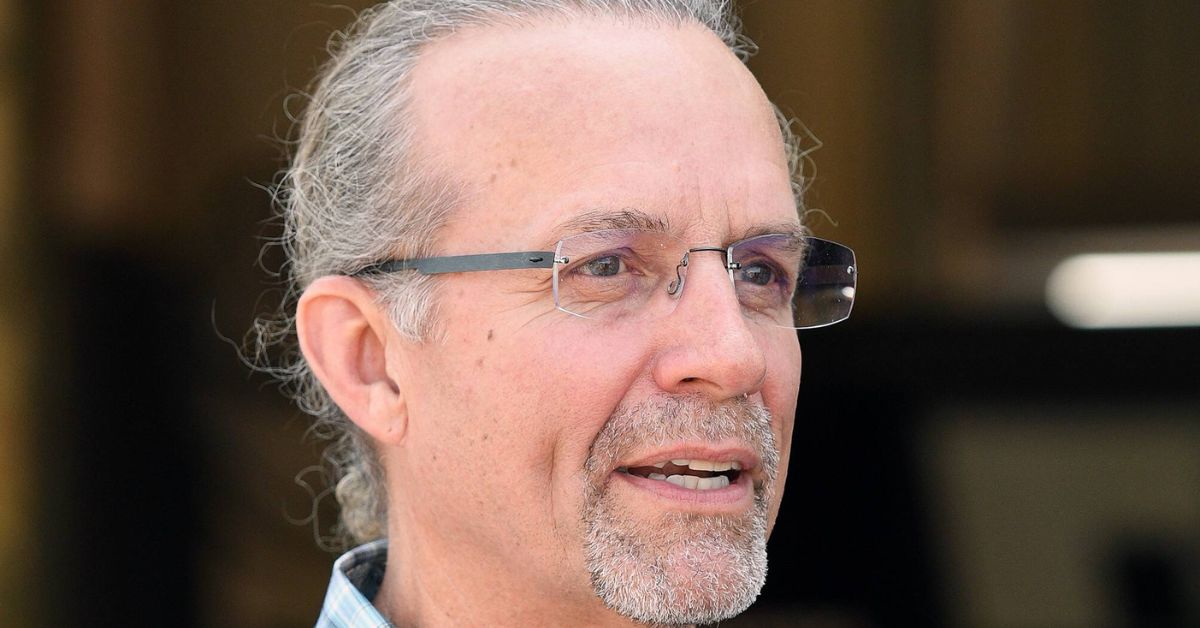
Kyle Petty
Kyle Petty
NASCAR, like many other motorsports, has always added safety measures after a major incident. The biggest example of this remains the HANS introduction as a compulsory safety tool after Dale Earnhardt tragically lost his life in a crash in Daytona.
But rarely has it happened that a safety measure has been taken proactively.
Kyle Petty was one of the very first NASCAR drivers to experiment with the HANS device in the mid-1990s. And it was no ordinary helmet.
The size of the helmet was bigger compared to the car windows. Its bulkiness made it difficult for a driver to get out of the window quickly during emergencies. Petty won a race in Dover in 1995 while using it.
Eventually, Petty stopped using it, and it wasn't just due to the physical constraints. There were questions about the machismo in NASCAR and the lack of willingness to accept the safety measures as crucial. This was the other reason.
Jeff Gordon, Mark Martin, and Tony Stewart were drivers who opposed the use of HANS. Darrell Waltrip, who tried the HANS, said, “I tried it. I hated it. Real restricted, you couldn’t turn your head."
But had NASCAR embraced the HANS device when Petty first demonstrated it in the mid-1990s, the sport might have avoided years of resistance to this life-saving technology.
Many drivers, including Kyle's son Adam Petty, Kenny Irwin Jr., Tony Roper, and Dale Earnhardt, later died from the very type of head-and-neck injuries the device was created to reduce.
"But the HANS device, no question in my mind, that’s been the greatest safety innovation for saving lives that we have ever seen,” Waltrip added.
And he is absolutely right about it being the greatest safety innovation. Since 2001, it’s been a mandate for safety requirements by NASCAR. And since its arrival, there hasn’t been a single cause of death because of head injuries sustained during crashes.
What is HANS and how does it work?
HANS is an abbreviation for Head and Neck Support. It’s a U-shaped device that fits around a driver’s neck, with tethers that keep it attached to the helmet.
The parts sitting on the shoulder go under the shoulder belts that are standard across motorsport. While strapped in, the HANS prevents neck and head movement, the main parts prone to move during sudden impacts, exactly what caused the deaths of around 9 drivers in NASCAR since the 1980s.
Earnhardt’s death was the fourth caused by a basilar skull fracture in NASCAR since May 2000, when Adam Petty, Kyle Petty’s 19-year-old son, died during an Xfinity race from the same injury, which is caused by the violent shaking of the neck during high-impact crashes.
In 1981, during an IMSA dirt race in Ohio, Patrick Jaquemart’s instant death from a basilar skull fracture caused Dr. Bob Hubbard to think about a safety device to keep the neck strapped in. The initial design of HANS 1 was a bulkier version, which Kyle Petty used in the 1990s.
After his son’s death, Petty went back to using the HANS, this time a sleeker and more efficient version. He was one of five drivers who used the HANS in the Daytona 2001.
You can read more on the Daytona Racing Digest!
Written by

Debrup Chaudhuri
Edited by

Suyashdeep Sason